
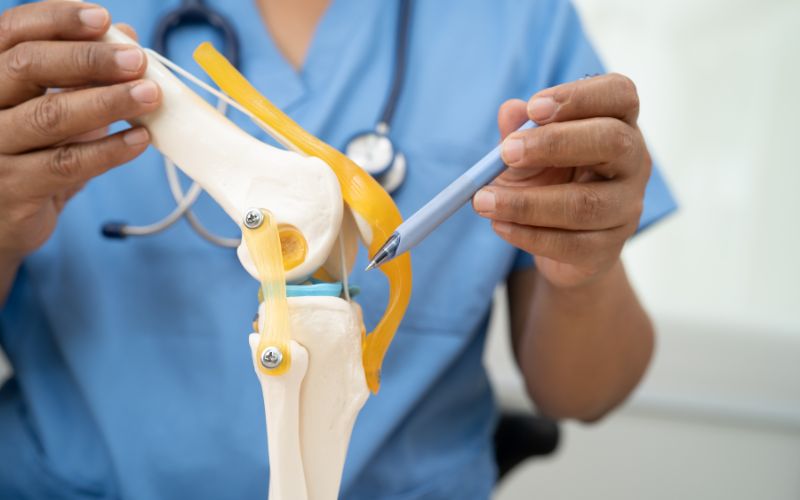
What Is Knee Replacement Surgery?
When Do You Need Knee Replacement?
Not every person with knee pain needs surgery. Doctors usually consider non-surgical treatment first when appropriate.
However, your orthopedic surgeon may consider knee replacement when you have:
- Severe and persistent knee pain
- Advanced arthritis
- Difficulty walking
- Pain while climbing stairs
- Reduced knee movement
- Knee deformity
- Pain that affects sleep
- Difficulty performing daily activities
- Limited improvement with non-surgical treatment
Moreover, the decision depends on your symptoms and how much knee damage affects your quality of life.
Common Causes of Knee Damage
Several conditions can damage the knee joint over time. Osteoarthritis remains one of the common causes of severe knee degeneration.
Other causes may include:
- Rheumatoid arthritis
- Previous knee injuries
- Severe fractures
- Ligament-related damage
- Cartilage damage
- Joint inflammation
- Age-related joint degeneration
Therefore, an orthopedic evaluation can help determine the cause of your knee pain.
Symptoms That May Indicate Severe Knee Damage
Knee problems can gradually affect your mobility. Watch for symptoms such as:
- Persistent knee pain
- Knee stiffness
- Swelling
- Difficulty walking
- Difficulty standing for long periods
- Pain while climbing stairs
- Reduced knee movement
- Knee deformity
- Pain during daily activities
- Difficulty sleeping because of knee pain
If these symptoms continue despite appropriate treatment, consult an orthopedic specialist.
Types of Knee Replacement
The type of knee replacement depends on the extent and location of joint damage.
Total Knee Replacement
Total knee replacement replaces the damaged surfaces of the major parts of the knee joint. Doctors may recommend this procedure when arthritis affects multiple areas of the knee.
Partial Knee Replacement
Partial knee replacement replaces only the damaged section of the knee. Doctors may consider it when arthritis affects a limited area and the remaining parts of the knee remain suitable.
Your orthopedic surgeon evaluates the knee carefully before recommending the appropriate procedure.
Knee Replacement Procedure
Before surgery, your doctor reviews your symptoms, medical history, physical examination findings, and imaging reports. Blood tests and other medical evaluations may also help assess your fitness for surgery.
During knee replacement, the surgeon removes damaged portions of the joint and prepares the bone surfaces for the implant. The surgeon then places the artificial components and checks knee movement.
The surgical approach and implant choice depend on your individual condition. Therefore, your surgeon will explain the planned procedure before surgery.
Benefits of Knee Replacement
Knee replacement aims to reduce pain and improve everyday function. Many suitable patients experience better mobility after recovery.
Potential benefits include:
- Reduced knee pain
- Improved walking
- Better knee movement
- Improved ability to perform daily activities
- Greater independence
- Better quality of life
- Improved ability to participate in suitable physical activities
However, results vary from person to person. Your general health, rehabilitation, implant selection, and adherence to medical advice can influence recovery.
Recovery After Knee Replacement
Recovery starts soon after surgery. Your healthcare team may encourage suitable movement and walking based on your condition.
Physiotherapy forms an important part of rehabilitation. Therefore, follow the exercise program recommended by your orthopedic and physiotherapy team.
Your recovery program may include:
- Pain management
- Early knee movement
- Walking exercises
- Strengthening exercises
- Balance training
- Mobility exercises
- Gradual increase in daily activities
- Follow-up appointments
Recovery time varies between patients. Avoid strenuous activity until your medical team confirms that your knee can safely handle it.
Physiotherapy After Knee Replacement
Physiotherapy helps restore knee movement and muscle strength after surgery. A structured rehabilitation program can also improve balance and walking ability.
Your physiotherapist may gradually introduce:
- Range-of-motion exercises
- Quadriceps strengthening
- Walking exercises
- Balance exercises
- Functional training
- Stair practice
- Activity-specific exercises
Moreover, regular rehabilitation can help you progress safely through recovery.